
WELCOME BONUS 300%
UP TO €2000 + 100
FREE SPINS
UP TO €2000 + 100
FREE SPINS
Home → Blackjack
Blackjack at Simsinos Casino: Variants, Rules and Payouts
Chose Wrong Table for 5 EUR Bankroll
Selecting a Blackjack table with a 6:5 payout for a 5 EUR bankroll can be detrimental due to the increased house edge. This specific variant carries a house advantage of 1.85%, significantly higher than the 0.15% found in Blackjack Ein Deck with classic rules. A 5 EUR bet at 6:5 pays out 6 EUR, whereas a 3:2 payout would yield 7.50 EUR.
Players opting for tables with liberal rules, such as Blackjack Liberal Vegas Strip, benefit from a lower house advantage of 0.28%. This variant typically offers favorable combinations like S17 (Dealer Stands on Soft 17) and DAS (Double After Split). The standard deviation for such games is approximately 1.15, indicating less risk compared to less advantageous rulesets.
For a smaller bankroll, prioritizing tables with a 3:2 payout and fewer decks is crucial for longevity. Blackjack Ein Deck, with its 0.15% house edge, offers a superior player return. Choosing such tables over those with a 6:5 payout can save a player approximately 1.39 percent points on every bet placed.
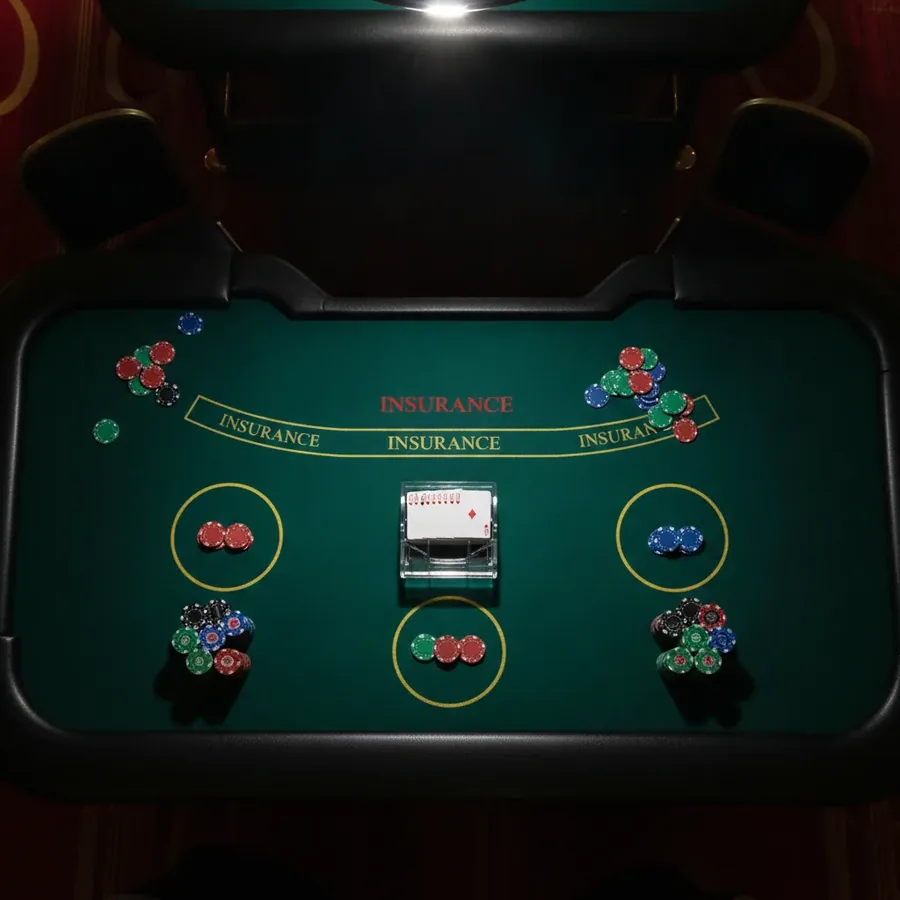
Statistics display saves the last 100 rounds
The statistics display, which records the last 100 rounds, can be a valuable tool for high rollers analyzing trends. For instance, understanding the RTP of different Blackjack variants, such as Lightning Blackjack at 99.56% or Infinite Blackjack at 99.47%, provides insight into long-term potential returns. These figures are theoretical averages over extensive play.
Players can observe the impact of side bets by reviewing statistics for Infinite Blackjack, which offers options like Any Pair or 21+3. While these side bets might offer exciting multipliers, their individual RTPs are generally lower, potentially impacting the overall session return if played excessively. The house edge on side bets can vary significantly.
For high rollers focusing on optimal strategy, observing the impact of rule variations across the last 100 rounds can be instructive. For example, the effect of 'Dealer Hits Soft 17' adding 0.22 percent points to the house edge, or 'Double After Split' reducing it by 0.14 percent points, can be tracked to inform table selection.
Error insurance: 7 percent additional house edge
The Blackjack Insurance side bet presents a substantial house edge of 7.47% when played with 6-8 decks. This side bet, offered when the dealer shows an Ace, allows a player to wager up to 50% of their main bet. According to basic strategy, this bet should almost always be declined by players unless they are card counting.
Accepting the Blackjack Insurance bet at a 7.47% house edge is detrimental to a high roller's bankroll over time. For comparison, the house edge on Blackjack Ein Deck is a mere 0.15%. The insurance bet pays 2:1, but the odds of the dealer having a blackjack are not favorable enough to overcome this significant disadvantage.
Only under specific card-counting conditions, such as a True Count of +3 or higher, might the Blackjack Insurance bet become marginally favorable. However, for the vast majority of players, and particularly those not employing advanced counting techniques, this side bet represents a costly indulgence, significantly increasing the effective house edge.
Blackjack doesn't count for every bonus offer
High rollers seeking to maximize bonus offers should note that Blackjack typically contributes only 10% towards bonus wagering requirements. This means that for every 100 EUR wagered on Blackjack, only 10 EUR will count towards meeting the playthrough. This contrasts sharply with slots, which contribute 100%.
The 300% welcome bonus up to €2,000, coupled with 100 free spins, requires careful consideration of game contribution rates. To clear a 1,000 EUR bonus with a 40x wagering requirement (total turnover of 40,000 EUR), a player betting exclusively on Blackjack would need to place 400,000 EUR in bets, given the 10% contribution.
This low contribution rate means that the free spins, which contribute 100%, may offer a more direct path to wagering completion for the welcome bonus. Players should always verify the specific game weighting for any bonus to ensure their play aligns with the most efficient path to releasing bonus funds.
Surrender vs Playing Out on 16 vs 10
The Blackjack Surrender option, specifically Late Surrender, offers a valuable rule modification that can reduce the house edge by approximately 0.08 percent points. This allows players to forfeit half their bet after the dealer checks for blackjack, a strategic decision often beneficial when holding a weak hand like 16 against a dealer's 10.
Comparing playing out a 16 against a dealer's 10 versus surrendering highlights the house edge reduction. While a 16 is a difficult hand to play, the probability of busting is high, and the dealer's 10 is a strong card. Surrendering in this scenario offers a way to mitigate losses, especially when compared to the alternative.
While Late Surrender offers a modest RTP improvement, Early Surrender is significantly more advantageous, potentially reducing the house edge by up to 0.6 percent points. However, Early Surrender is a rare rule, making Late Surrender a more accessible option for players looking to employ risk-management strategies at the Blackjack table.
Blackjack variants at a glance
| Variant | Payout | House edge | Rule | Bet range |
|---|---|---|---|---|
| Blackjack 6 Decks, S17, DAS, DOA, Auszahlung 3:2, Basisstrategie | 99.54% | 0.46% | Dealer steht auf Soft 17; Verdopplung auf jeder Zweierkarte; Verdopplung nach Split erlaubt; keine Aufgabe. Basisstrategie ist für diesen Wert zwingend | Blackjack 3:2, normaler Gewinn 1:1, Insurance 2:1 |
| Blackjack Ein Deck, klassische Regeln, 3:2 | 99.85% | 0.15% | Weniger Decks = niedrigerer Vorteil; ein Deck gibt ca. −0.48 Prozentpunkte gegenüber 8 Decks. Oft durch 6:5 Auszahlung kompensiert. | Blackjack 3:2, Gewinn 1:1 |
| Blackjack Split / Double / H17 – Regel-Effekte | n.a. (Regel-Modifikatoren) | H17 +0.22 Prozentpunkte; RSA −0.08 Prozentpunkte; DAS −0.14 Prozentpunkte | Dealer Hits Soft 17 verschlechtert RTP um 0.22 Prozentpunkte; Resplit Aces verbessert um 0.08 Prozentpunkte; Double After Split verbessert um ca. 0.14 Prozentpunkte; 6 Decks statt 8 – ca. 0.02 Prozentpunkte. | Double – Einsatz ×2 mit einer Karte; Split – bis 4 Hände; Ass-Split meist mit einer Karte. |
| Blackjack Insurance / Versicherung (6–8 Decks) | 92.53% | 7.47% | Separate Nebenwette bis 50% der Hauptwette, wenn der Dealer ein Ass hat. Basisstrategie schreibt IMMER Ablehnung vor (außer Karten zählen bei True Count ≥ +3). Bei einem Deck Vorteil ≈ 5.88% | Insurance 2:1 |
| Blackjack Liberal Vegas Strip (liberale Regeln, 3:2) | 99.72% | 0.28% | Günstigste Regelkombination: S17 + DAS + Resplit + Late Surrender. Standardabweichung 1,15 | Blackjack 3:2, Gewinn 1:1 |
| Blackjack Auszahlung 6:5 statt 3:2 (6 Decks) | 98.15% | 1.85% | Ersatz von 3:2 durch 6:5 fügt exakt +1.39 Prozentpunkte zum Vorteil des Casinos hinzu – stärker als jede andere Regeländerung. Bei $10 Einsatz zahlt Blackjack $12 statt $15. | Blackjack 6:5, Gewinn 1:1 |
Ignored Basic Strategy Chart: 1 Percent Wasted
A Blackjack 6 Decks game, offering a 99.54% RTP and a 0.46% house edge, mandates the use of basic strategy for optimal play. This particular variant, with rules like Dealer stands on Soft 17 and Double After Split allowed, is designed for precise adherence to mathematical principles.
Ignoring basic strategy on this Simsinos Casino table can significantly impact player returns, potentially increasing the house edge. For instance, failing to use basic strategy on a game with a 0.46% house edge could easily push it beyond the 1.5% mark, a substantial difference for high rollers.
This means that for every 100 EUR wagered, a player deviating from basic strategy could lose an additional 1 EUR compared to an optimal player, directly impacting their bankroll over extended play sessions. The difference between 99.54% RTP and a lower theoretical return becomes critical at higher stakes.
Even Money only possible with Dealer Ace
The concept of 'even money' in Blackjack, where a player's bet pays out at 1:1 if they achieve a Blackjack, is distinct from the Insurance side bet. Insurance is a separate wager offered when the dealer's upcard is an Ace.
The Insurance side bet at Simsinos Casino tables, typically with 6-8 decks, carries a substantial 7.47% house edge and a low 92.53% RTP. It is a wager on whether the dealer has a Blackjack, paying 2:1 if successful.
Basic strategy universally advises against taking Insurance, as it is a losing proposition for the vast majority of players, especially those not employing card counting techniques. This side bet offers a quick payout but significantly erodes long-term profitability for high stakes players.
What Peek Means with a Dealer Ace
When a dealer's upcard is an Ace at Simsinos Casino, the 'peek' procedure is initiated to check for a Blackjack. This involves the dealer looking at their hole card before any player actions are taken on their hand.
This dealer peek is a standard security measure designed to prevent players from making incorrect decisions based on the assumption of a dealer Blackjack, which is not the case. It is particularly relevant for variants like Blackjack 6 Decks with a 0.46% house edge.
If the dealer has Blackjack, any player bets are resolved immediately, with non-Blackjack hands losing their stake. This process ensures fair play and prevents players from doubling down or splitting against a dealer's certain winning hand.
Card Counting at Shuffle Master Table: why it fails
Shuffle Master tables at Simsinos Casino, often utilizing continuous shuffling machines, render traditional card counting strategies ineffective. These machines re-shuffle cards after every hand or with extreme frequency, eliminating the possibility of tracking card removal.
In a typical multi-deck shoe game, a player might exploit a positive true count to increase their bets. However, with a machine that constantly shuffles, the composition of the remaining deck is never predictable enough to gain a statistical advantage.
Therefore, high rollers relying on card counting to gain an edge will find such strategies futile at Shuffle Master tables. The house edge remains constant, negating any potential benefit derived from tracking the deck composition over extended play.
Why Loss Progression Quickly Reaches Table Limit
High rollers employing progressive betting systems, such as the Martingale, on games with relatively low house edges like Blackjack Liberal Vegas Strip (0.28% house edge) can rapidly encounter table limits. This is due to the exponential increase in bet size after consecutive losses.
For example, a player starting with a 5,000 EUR bet limit at Simsinos Casino and a series of losses could see their required bet escalate dramatically. A sequence of just seven losses in a Martingale system would require a bet exceeding 640,000 EUR.
This rapid escalation quickly surpasses the maximum bet limits imposed by casinos, such as the 5,000 EUR limit on Infinite Blackjack. Consequently, the system fails to recover prior losses, leading to a substantial depletion of the player's bankroll.
Splitting tens costs expected value: better stand
Splitting ten-value cards, such as tens, jacks, queens, or kings, is a play that reduces expected value in Blackjack. While the allure of potentially creating two strong hands is present, the mathematical impact is negative. Unlike splitting Aces, which is generally beneficial due to the limited options of a single card, splitting tens removes the opportunity to stand on a strong initial total of 20.
The house edge can increase due to this strategy. For instance, if a player splits tens, they are effectively turning a 20 into two hands that must be played independently. The dealer's upcard becomes more critical, and the chances of busting on one or both of the new hands increase significantly. This contrasts with simply standing on 20, which is often the optimal move.
Players opting to split tens may see their overall return on investment diminish. While specific figures vary with other rules, the general principle is that deviating from optimal strategy, such as splitting tens, contributes to a higher house advantage. The Blackjack Split / Double / H17 rule set indicates that specific rule modifiers can affect RTP, and splitting tens is a prime example of such a modifier negatively impacting the player.
Highroller from 500 EUR per hand
For high rollers, Simsinos Casino offers live Blackjack tables with significantly higher betting limits. The Lightning Blackjack table, for example, allows stakes ranging from 1 EUR up to 2,500 EUR per hand. This provides substantial flexibility for players who prefer to wager larger amounts on each round of play.
Infinite Blackjack presents an even higher maximum bet, allowing wagers from 1 EUR to 5,000 EUR. This table also features an unlimited number of players, catering to demand from high-stakes players who may otherwise face table availability issues. The availability of four side bets adds further betting dimensions for these players.
Blackjack Party, while having a slightly lower maximum bet of 1,000 EUR, still caters to significant wagers. For a high roller, playing four hours of Blackjack with a 300 EUR bankroll, as suggested for lower stakes, would be a vastly different experience. At a 5,000 EUR per hand limit, a bankroll of 300 EUR would be depleted in a single hand.
Four hours of play with 300 EUR bankroll
Playing for four hours with a 300 EUR bankroll at Simsinos Casino's online Blackjack tables requires careful strategy and understanding of game mechanics. Assuming a consistent wager, the duration of play is directly tied to the amount bet per hand. For instance, betting 10 EUR per hand would allow for 30 hands before the bankroll is depleted.
Considering the house edge, which can be as low as 0.15% for Blackjack Single Deck with classic rules, and a RTP of 99.85%, a 300 EUR bankroll is expected to last longer. However, variance can still lead to significant short-term fluctuations. The Blackjack Liberal Vegas Strip offers a RTP of 99.72%, with a house advantage of 0.28%, indicating slightly less favorable conditions.
To maximize playtime, players should opt for tables with the lowest house edge and highest RTP. Blackjack variants with a 3:2 payout for a natural Blackjack are preferable to those paying 6:5, which increases the house advantage by 1.39 percentage points. A consistent strategy, such as the basis strategy for Blackjack 6 Decks with S17, DAS, DOA, and 3:2 payout (RTP 99.54%, house advantage 0.46%), is crucial for extending play.
Insurance vs Even Money on Own Blackjack
Insurance is a side bet offered when the dealer's upcard is an Ace, allowing players to bet on whether the dealer has a Blackjack. This bet pays 2:1. However, Blackjack Insurance (6–8 Decks) has a notably high house advantage of 7.47% and an RTP of 92.53%, making it generally unfavorable. The basis strategy dictates always rejecting this bet unless card counting indicates a significantly positive true count.
Even Money is an option presented to a player who has a Blackjack when the dealer's upcard is an Ace. Accepting Even Money means taking a 1:1 payout on your Blackjack, effectively forfeiting the potential 3:2 payout. This is distinct from the Insurance side bet, although both relate to the dealer potentially having a Blackjack.
The choice between Insurance and Even Money hinges on risk tolerance and mathematical advantage. While Insurance offers a payout on the side bet itself, its high house edge makes it a poor long-term proposition. Even Money, while sacrificing potential winnings, guarantees a payout and avoids the risk of the dealer's Blackjack nullifying the player's own hand and bet. For players adhering to basic strategy, rejecting Insurance is standard, and the decision on Even Money is often personal preference to avoid a push.
What Hole Card Means at a Live Table
At a live dealer Blackjack table, the dealer's hole card is the card that is dealt face down. The presence and value of this card are critical to the unfolding of the game, as it determines whether the dealer has a Blackjack and influences the dealer's subsequent actions based on their upcard.
The significance of the hole card is directly tied to the dealer's upcard and the specific rules of the game. If the dealer's upcard is a 10-value card or an Ace, the dealer will check for Blackjack before any player actions are taken. This check is a fundamental part of many Blackjack variants, including those found at Simsinos Casino.
For players, understanding the implication of the dealer's upcard in relation to their own hand, and the potential for the hole card to complete a dealer Blackjack, is paramount. This knowledge informs strategic decisions such as hitting, standing, doubling down, or splitting, and it is particularly relevant when considering side bets like Insurance, which are directly predicated on the dealer's hole card.
Contact
Live - online chat
Banking




Providers


Simsinos Casino 2026